
🫧 Buoyancy Control in Scuba Diving: The One Skill That Instantly Makes You a Better Diver
Updated: Feb 1
If scuba diving had a superpower, buoyancy control in scuba diving would be it.
It’s the difference between:
Looking like a calm underwater astronaut 🚀
And fighting the ocean like a malfunctioning washing machine 🫨
Every diver thinks they’re decent at buoyancy… until they dive next to someone who barely moves, barely kicks, and somehow stays perfectly still while taking photos, checking gauges, and enjoying the reef like they own the place.
Let’s talk about why buoyancy control in scuba diving is the most important skill you’ll ever learn, and how mastering it transforms every single dive.

🌊 What Is Buoyancy Control in Scuba Diving (Really)?
At its core, buoyancy control in scuba diving is the ability to:
Stay neutrally buoyant
Maintain a stable depth
Move intentionally, not accidentally
But in practice?It’s the art of not thinking about it at all.
Great buoyancy means:
You hover instead of kneeling
You glide instead of kicking
You breathe, and your body responds naturally
It’s subtle. It’s quiet. And it’s powerful.
⚠️ Why Buoyancy Control in Scuba Diving Is a Safety Skill (Not Just a “Nice Skill”)
Many dive incidents don’t start with panic — they start with poor buoyancy.
Without solid buoyancy control, divers are more likely to:
Drift too shallow without noticing
Sink onto reefs or wrecks
Crash into structures or stir up silt
Waste air through constant finning
Good buoyancy control in scuba diving keeps you:
At a safe, predictable depth
Calm and energy-efficient
Less stressed, which means better decision-making
Calm divers are safe divers.And buoyancy creates calm.

😌 Comfort: Why Good Buoyancy Makes Diving Feel Effortless
Ever finish a dive exhausted for no good reason?
That’s usually buoyancy talking.
When buoyancy is off:
You kick constantly
Your legs burn
Your breathing rate spikes
When buoyancy is dialled in:
Your movements are minimal
Your breathing slows naturally
Your dives feel longer and easier
Suddenly, diving doesn’t feel like work — it feels like floating through a dream.
That’s the magic of buoyancy control in scuba diving.

🪸 Conservation: How Buoyancy Protects the Ocean
One careless fin kick can destroy coral that took decades to grow.
Poor buoyancy leads to:
Fin damage on reefs
Accidental contact with marine life
Stirred-up sediment that harms ecosystems
Excellent buoyancy control in scuba diving allows you to:
Hover above reefs without touching
Observe marine life responsibly
Leave the underwater world exactly as you found it
Great divers don’t just explore the ocean — they protect it.
📸 Better Photos, Better Videos, Better Memories
If you enjoy underwater photography or videography, here’s the truth:
📷 Buoyancy is more important than your camera.
With strong buoyancy control:
You line up shots without crashing forward
You stay steady while framing subjects
You don’t scare marine life away
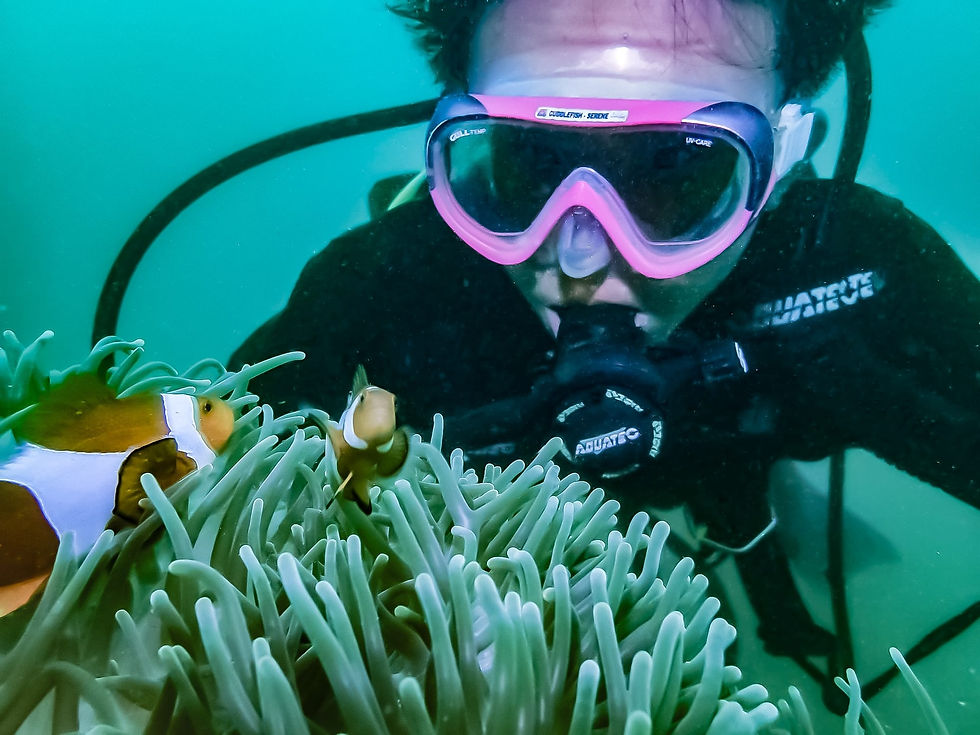
That stunning photo? It started with buoyancy control in scuba diving.
🔧 How to Improve Buoyancy Control in Scuba Diving (Without Overthinking It)
1️⃣ Fix Your Weighting (This Changes Everything)
Most divers are overweighted.
Too much weight means:
Constant BCD inflation
Poor trim
Unstable depth control
Proper weighting allows your body and lungs to do the work — not your BCD.
2️⃣ Use Your Lungs as Fine Controls
Your BCD sets general buoyancy.Your lungs handle precision.
Slow inhale → rise slightly
Slow exhale → sink slightly
Mastering breathing is mastering buoyancy control in scuba diving.
3️⃣ Improve Trim (Horizontal Is King)
If you’re vertical, buoyancy becomes a fight.
Aim for:
Flat, horizontal body position
Knees slightly bent
Fins behind you, not below you
Good trim makes buoyancy easier, instantly.
4️⃣ Practice Hovering (Yes, On Purpose)
Hovering drills feel boring — until they change your diving forever.
Practice:
Holding depth without finning
Small depth changes using breath only
Task-loading while staying neutral
The ocean rewards patience.
🌟 Why Buoyancy Control in Scuba Diving Changes Everything
When buoyancy becomes second nature:
Your air lasts longer
Your dives feel calmer
Your confidence skyrockets
Your enjoyment multiplies
Suddenly, every dive feels smoother — whether it’s local, overseas, shallow, deep, calm, or current-filled.
That’s why buoyancy control in scuba diving isn’t an “advanced” skill.
It’s a foundational one.

🫧 Final Thoughts: Master Buoyancy, Master Diving
You can buy better gear. You can travel to better dive sites. You can upgrade your certification.
But nothing improves your diving faster than mastering buoyancy control in scuba diving.
So slow down.Hover.Breathe.Feel the water support you.
When buoyancy clicks, diving stops being something you do —and becomes something you experience. 🌊🤿


Comments